
 Find-R-Scopes

 Filters
 Lenses
 Cameras
 Lighting

 Accessories








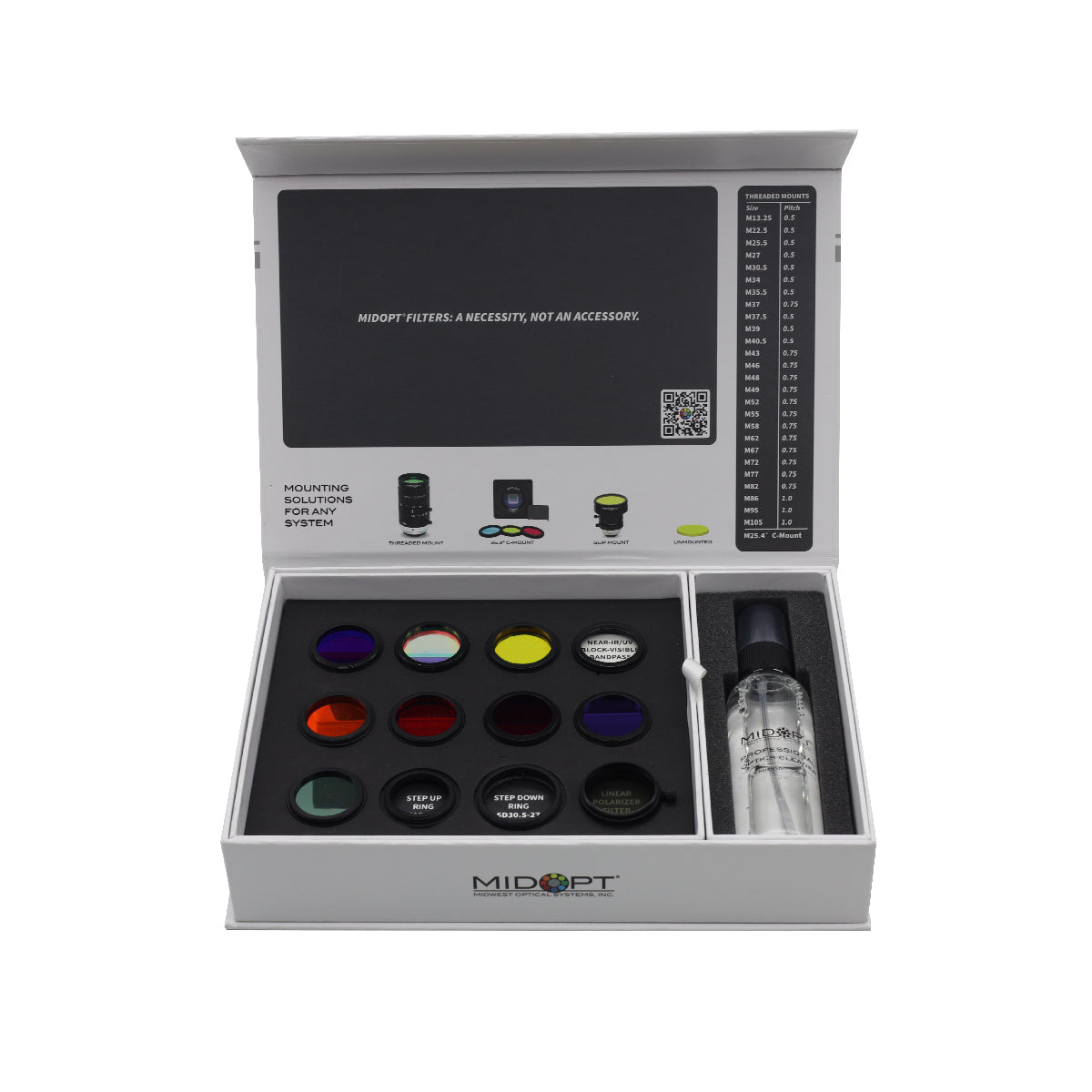
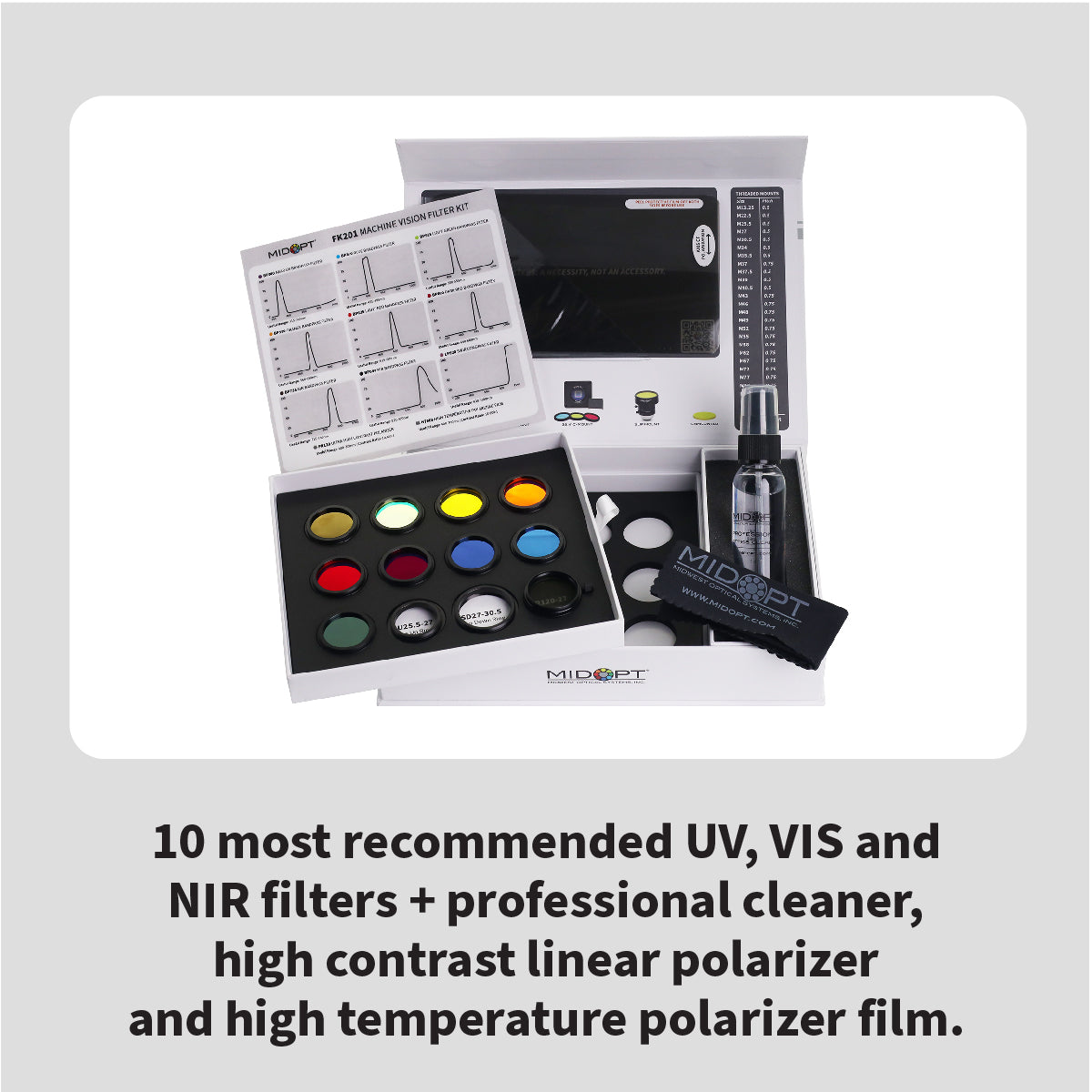
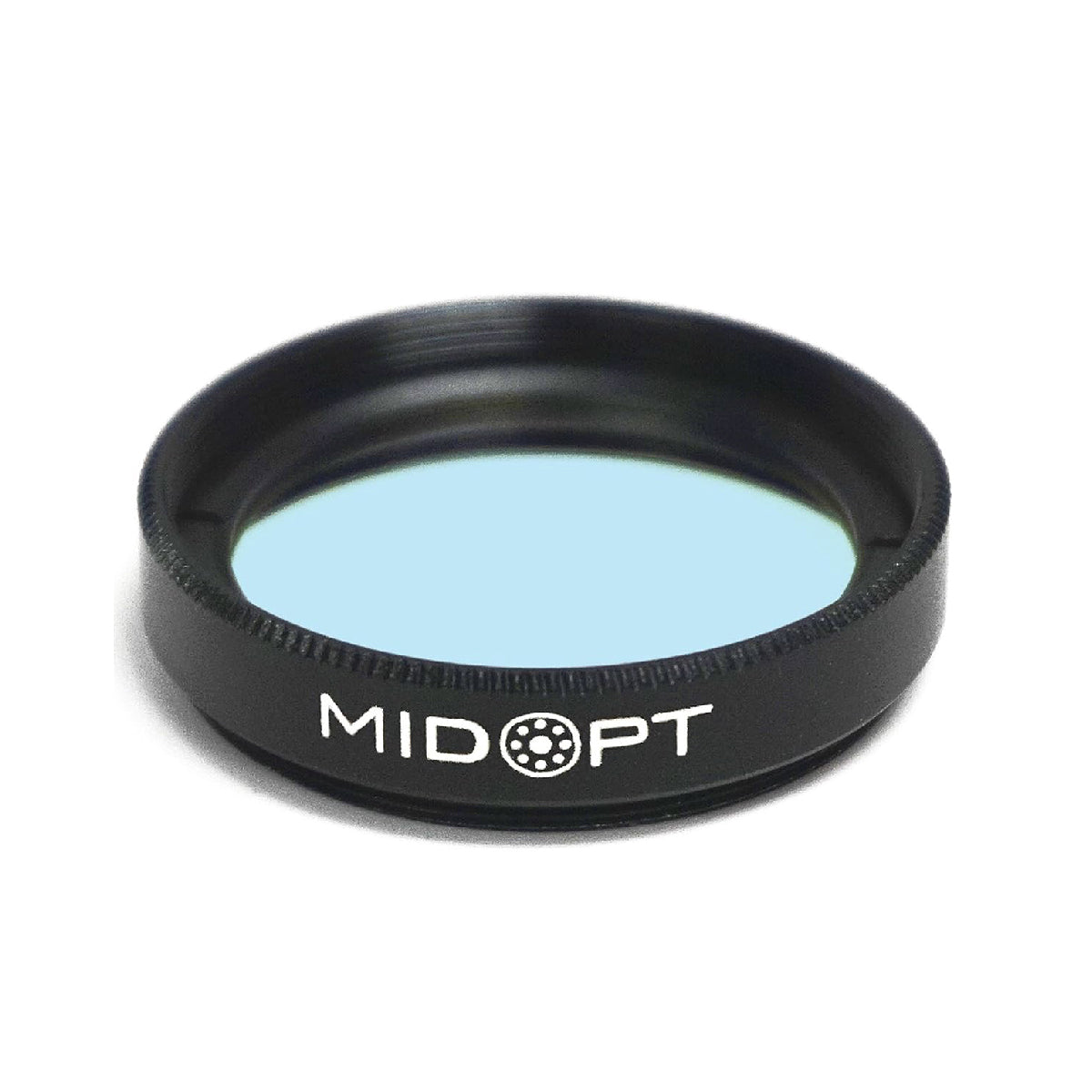
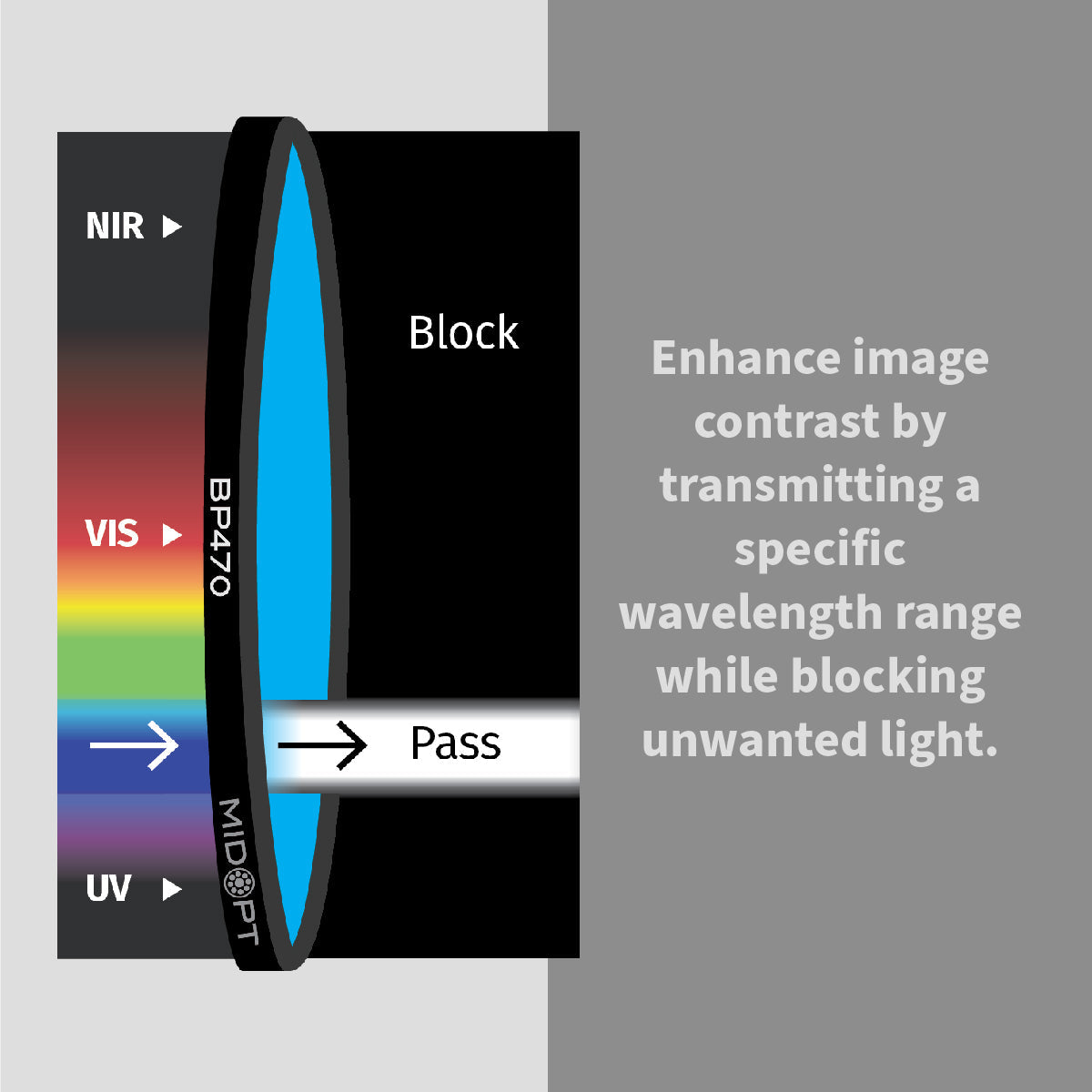


For decades, the NDVI (Normalized Difference Vegetation Index) has been the standard approach for assessing plant health. NDVI uses a camera equipped with red and NIR (near-infrared) filters and is calculated using the formula:
NDVI = (NIR – Red) / (NIR + Red)
This method has been widely used because healthy vegetation absorbs red light and strongly reflects NIR light. While NDVI remains valuable, advancements in plant science and sensor technology have revealed that broader spectral analysis can uncover far more detailed insights into crop condition, stress and growth patterns.
Healthy plants also absorb visible blue light, while reflecting some visible green light, information that NDVI alone can't capture. By incorporating additional wavelengths into multispectral imaging – particularly blue, green and NIR – users can gather richer, more precise data. The combination of these spectral responses enables real-time crop assessment using compact or modified consumer cameras, aerial drones and lightweight imaging systems.
Next-Generation Triple Bandpass Filters
Triple Bandpass Filters allow a single camera to simultaneously capture three targeted wavelengths, unlocking detailed vegetation indices without the need for multiple sensors. This dramatically reduces weight, cost and system complexity for aerial and field-based imaging.
Green + Red + NIR Triple Bandpass
This configuration enhances traditional red/NIR analysis by adding green, supporting indices such as:
-
Chlorophyll Vegetation Index (CVI):
CVI = (NIR × Red) / (Green²) -
Normalized Green (NG):
NG = Green / (NIR + Red + Green)
These indices provide insight into nutrient content, chlorophyll concentration and overall plant vitality.
Blue + Green + NIR Triple Bandpass
Using wavelengths like 475nm, 550nm and 850nm supports the ENDVI (Enhanced Normalized Difference Vegetation Index), which often reveals plant conditions earlier and with greater detail than red-based NDVI.
ENDVI = ((NIR + Green) – (2 × Blue)) / ((NIR + Green) + (2 × Blue))
ENDVI can identify subtle stress patterns, soil variations, water usage and canopy structure, often at the pixel level, making it a powerful tool for precision agriculture.
What These Technologies Can Reveal
Multispectral imaging using triple bandpass filters can provide actionable insights such as:
- Early indicators of crop stress
- Chlorophyll levels and nutrient health
- Water distribution and drought impact
- Soil type and surface variation
- Detection of invasive weeds or diseased plants
- Growth patterns across large fields
Because the human eye cannot detect many of these wavelength differences, spectral imaging gives farmers and agronomists a deeper view of crop conditions long before visual symptoms appear.
A Brief History of NDVI
The foundations of NDVI trace back to research during World War II, when infrared camera systems revealed stark differences between vegetation and man-made objects. Vegetation appeared bright in NIR, while painted or artificial objects appeared dark – despite looking similar in visible light.
This discovery led scientists to explore how infrared reflectance could indicate plant health. They observed that stressed plants show reduced NIR reflectivity before visible color changes occur. In the 1970s, researchers formalized the now-standard NDVI calculation, demonstrating a reliable numerical scale from –1 to +1, where higher values reflect greater plant vitality.
NDVI remains a foundational tool in remote sensing, but modern multispectral techniques – enabled by triple bandpass filters – offer deeper insights for today’s precision agriculture.