$15.00
$15.00

 Find-R-Scopes

 Filters
 Lenses
 Cameras
 Lighting


 Accessories









For over three decades, MidOpt® has focused exclusively on developing high-performance machine vision filters designed specifically for industrial imaging applications. Their philosophy is simple: create optical filters for machine vision using the precision of machine vision.

In machine vision, backlighting is one of the most effective ways to achieve high-contrast images for measurement and inspection. But what happens when there’s no room to place a light behind your part?

Sustainability is becoming a key focus across manufacturing, and machine vision systems are no exception. While cameras and software often get the most attention, lighting plays a major role in both system performance and energy consumption. By optimizing illumination, manufacturers can significantly reduce energy waste while maintaining – or even improving – inspection accuracy.

Selecting the right lens is one of the most critical decisions in building a successful machine vision system. While cameras and lighting often get the spotlight, the lens ultimately determines how well your system captures detail, maintains accuracy and performs over time.

For over three decades, MidOpt® has focused exclusively on developing high-performance machine vision filters designed specifically for industrial imaging applications. Their philosophy is simple: create optical filters for machine vision using the precision of machine vision.
In machine vision, backlighting is one of the most effective ways to achieve high-contrast images for measurement and inspection. But what happens when there’s no room to place a light behind your part?

As agriculture and environmental monitoring become increasingly data-driven, NDVI (Normalized Difference Vegetation Index) has become one of the most widely used tools for assessing vegetation health.

Protective windows act as a barrier between the imaging system and real-world environment. Whether operating in a factory, outdoors or in harsh industrial conditions, these optical elements help protect sensitive components while preserving image quality.

Lighting plays a critical role in machine vision systems. Even the best camera and lens cannot produce accurate results without proper illumination.

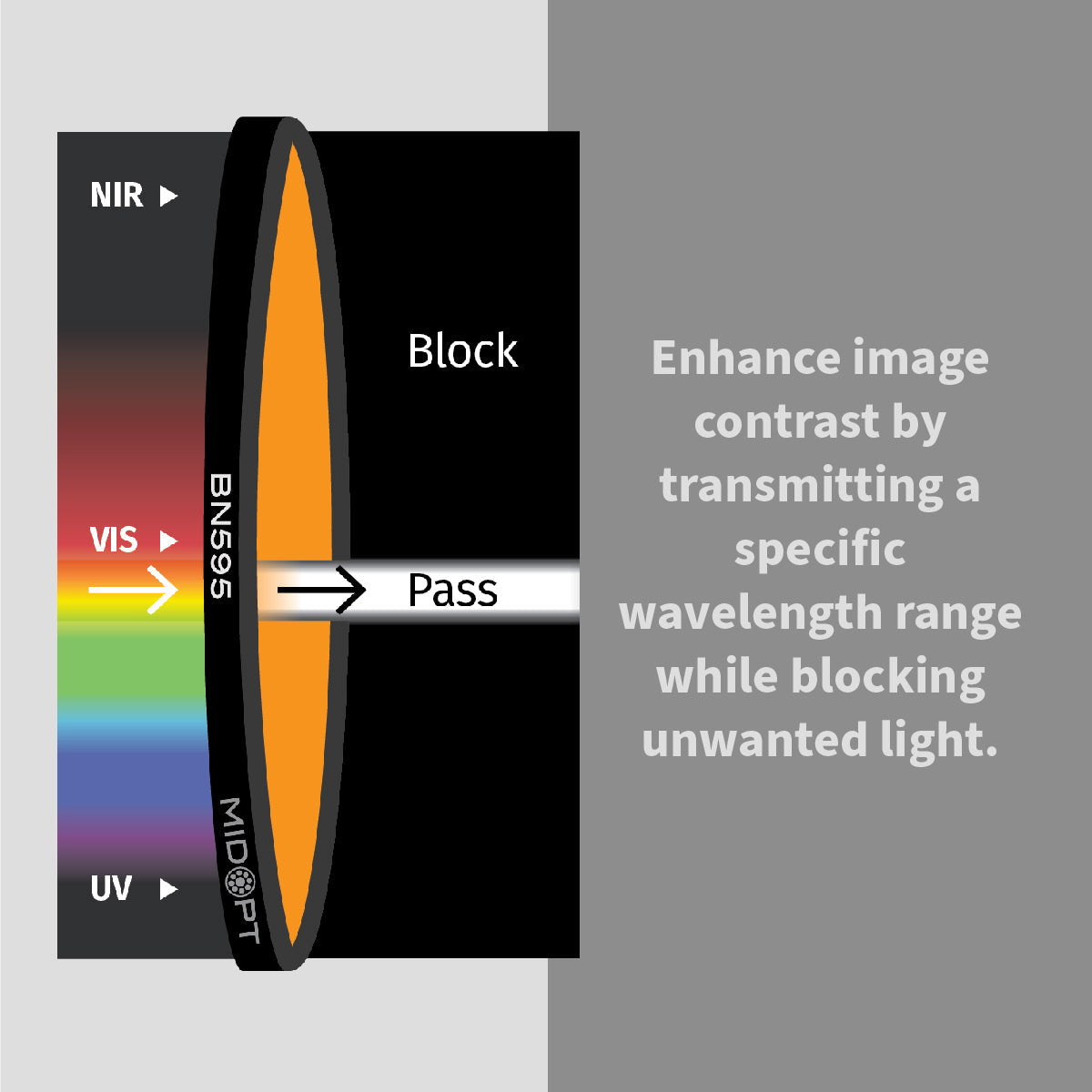
Machine vision filters are one of the most important components in any industrial imaging system. They directly affect how clearly a camera can detect features, measure objects, and identify defects. Without the right filter, even a high-end camera and lighting setup can produce inconsistent or inaccurate results.

Optical filters remain one of the most important components in modern imaging systems used in machine vision, semiconductor inspection, biomedical research, and automated manufacturing.

In this guide, we’ll explain how to select the right MidOpt filter based on application, lighting, and camera configuration.

In machine vision systems, optical filters play a critical role in controlling light, improving contrast and enhancing image accuracy. But even the best filter can't perform as intended if it's not mounted correctly. Mounting solutions for machine vision filters are a foundational yet often overlooked part of system design, directly affecting alignment, stability, repeatability and overall image quality.

Achieving accurate, repeatable results depends on far more than just selecting the right camera or lens. One of the most overlooked components in many imaging systems is the optical filter. When properly selected, filters dramatically improve image quality, reduce variability and ensure consistent performance across changing environments.

In machine vision, image quality is everything. Whether a system is tasked with inspecting tiny components, reading barcodes at high speed, verifying assembly quality or guiding robots with absolute precision, the camera can only make decisions based on the light it receives. That’s why optical filters – a sometimes overlooked part of a vision system – play a critical role in ensuring accurate, repeatable imaging.

Many LED light sources emit light in a Gaussian- or “bell-shaped” curve: strong in the center wavelengths, tapering off at the edges. For a filter to maximize image performance, its passband should closely emulate this Gaussian curve – matching the center, width and tails. When a filter’s passband is too broad or too “flat-topped,” more unwanted ambient light (outside the LED’s strong emission region) is allowed through, increasing noise and reducing contrast.

When building a vision system, selecting an optical filter that emulates the bell-shaped output (Gaussian transmission curve) of the illumination source's spectrum can directly influence image clarity, contrast and overall system performance.

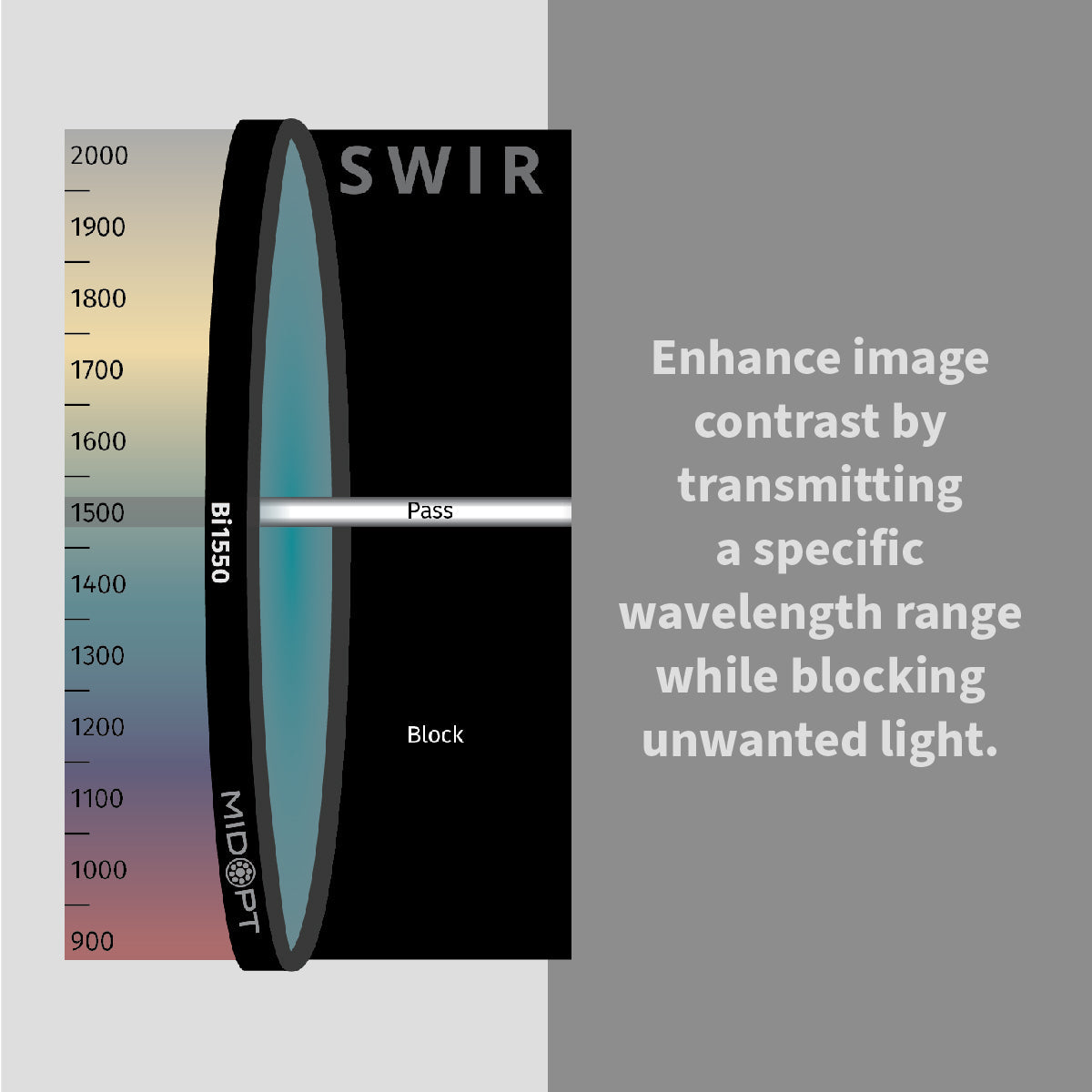
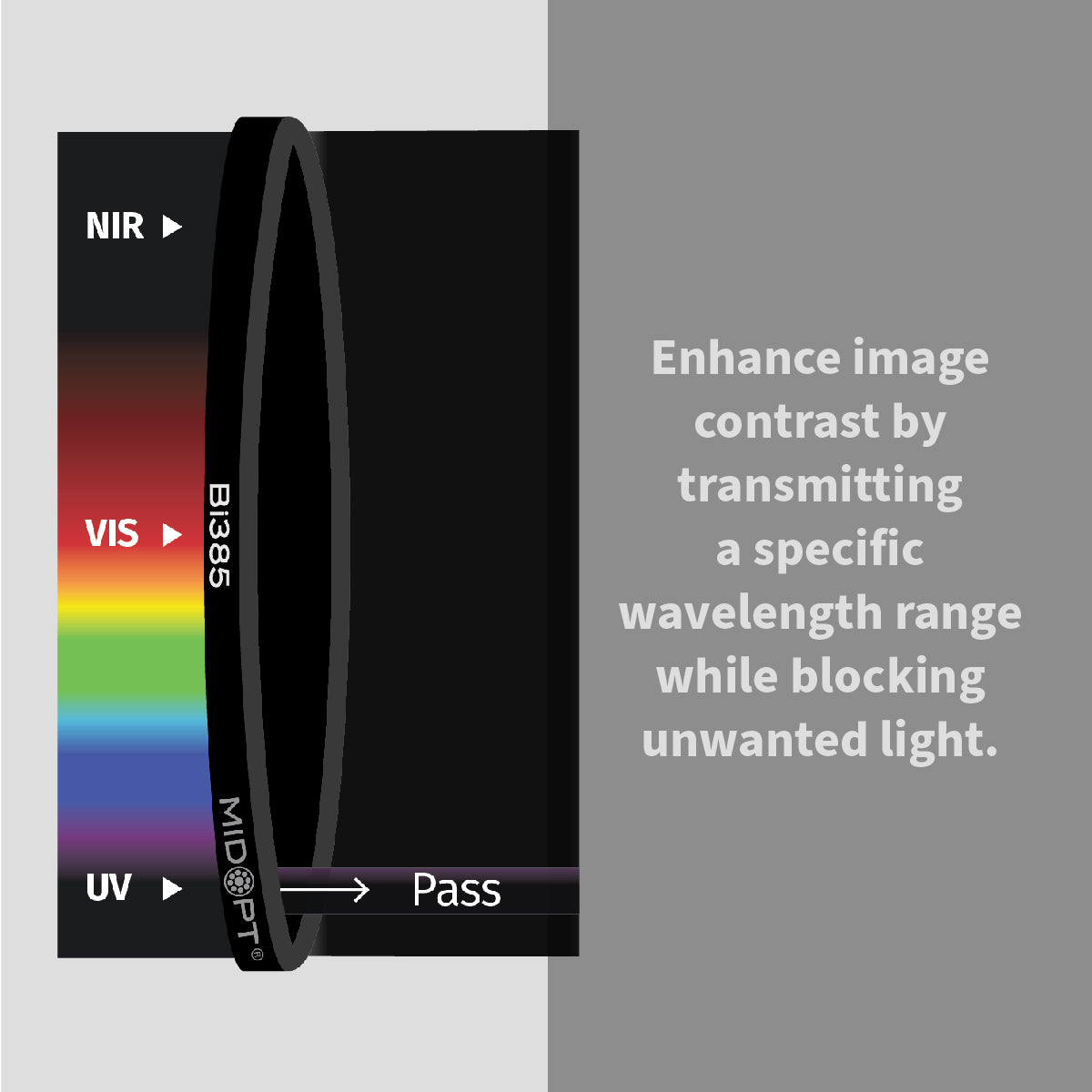
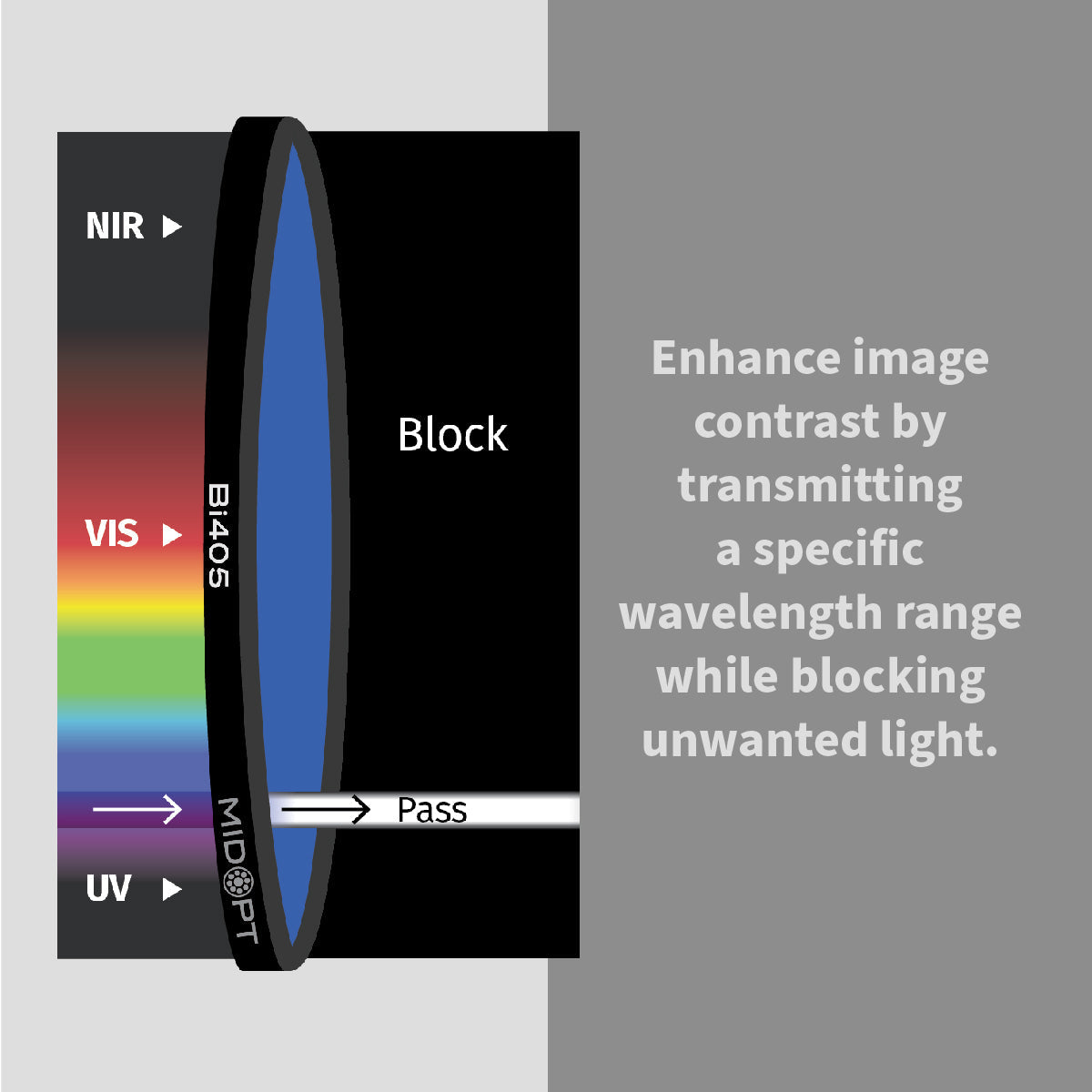
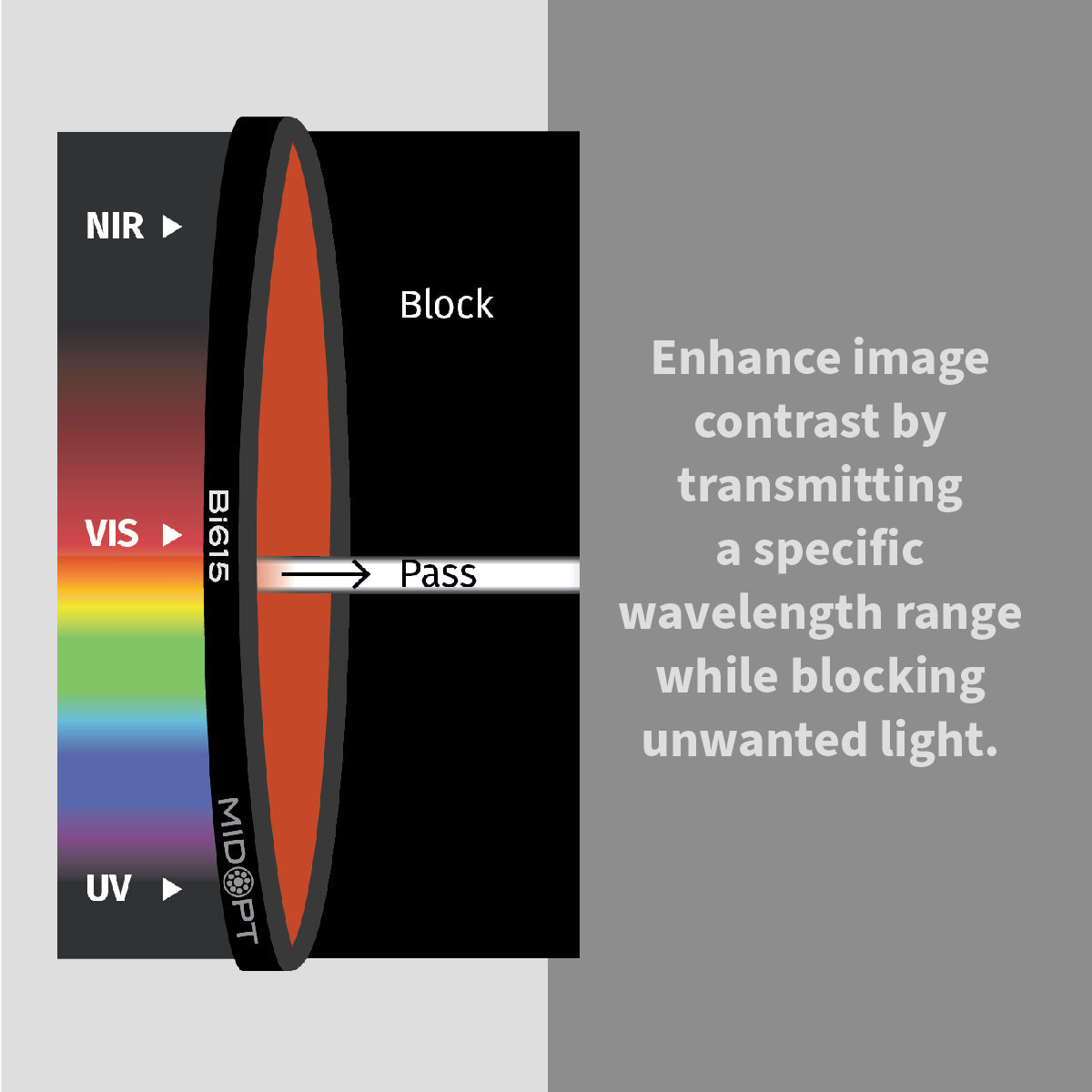
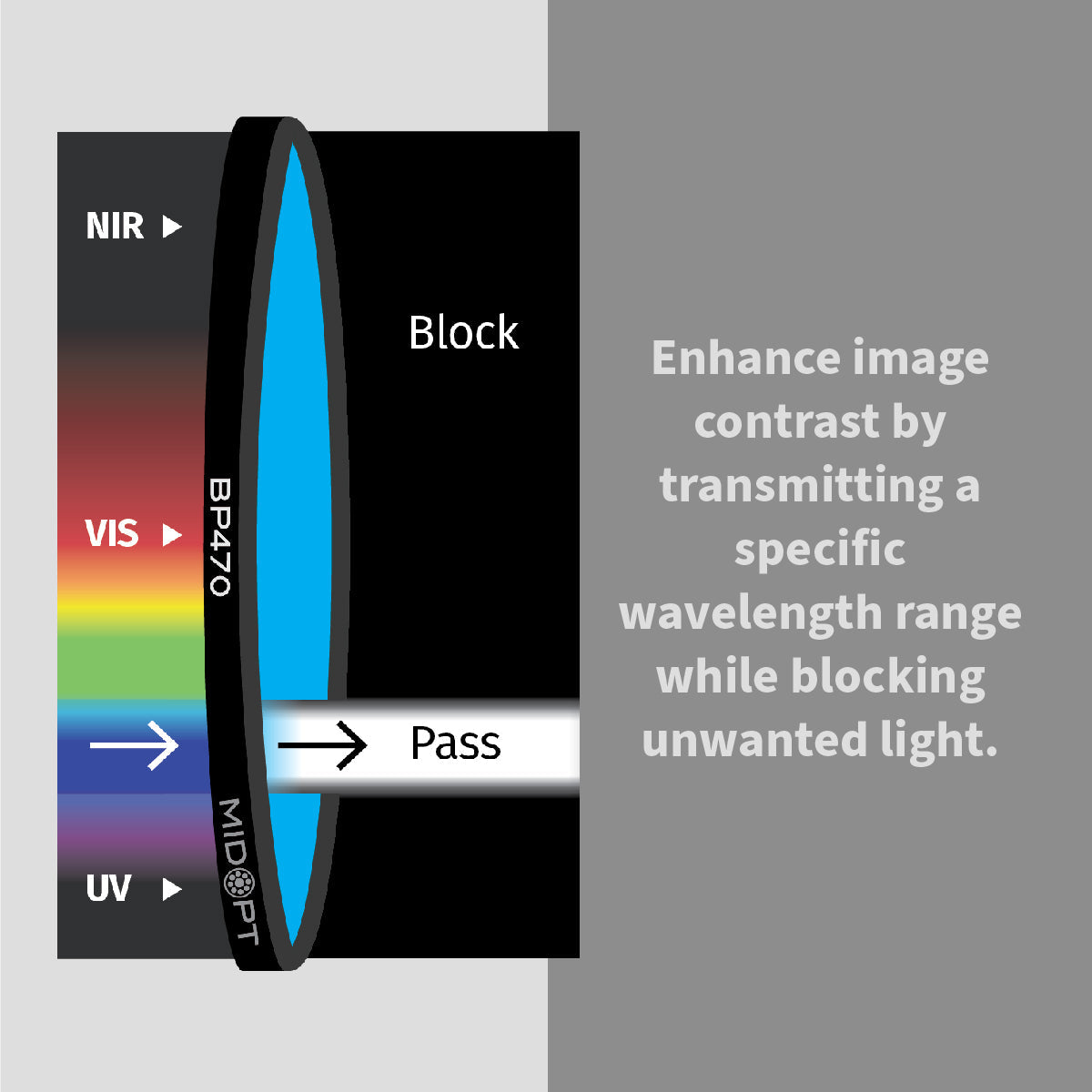
In machine vision, optical filters aren’t just add-ons, they’re essential tools for image accuracy. By carefully controlling which wavelengths pass through (and which don't), filters help maximize contrast, enhance color accuracy, highlight critical details and block ambient light that can compromise results.
Optical filters are essential for achieving reliable, high-quality results in machine vision applications. They don’t just block or pass light – they enhance system performance by increasing contrast, improving color accuracy, reducing glare and isolating specific wavelengths. But not all filters are created equal.

Since the 1980s, MidOpt® has been a pioneering force in designing and manufacturing high-quality optical filters tailored specifically for industrial imaging and machine vision systems.