
 Find-R-Scopes
 Filters
 Lenses
 Cameras
 Lighting

 Accessories






Infrared Imaging (NIR/SWIR): What It Is and How It Works
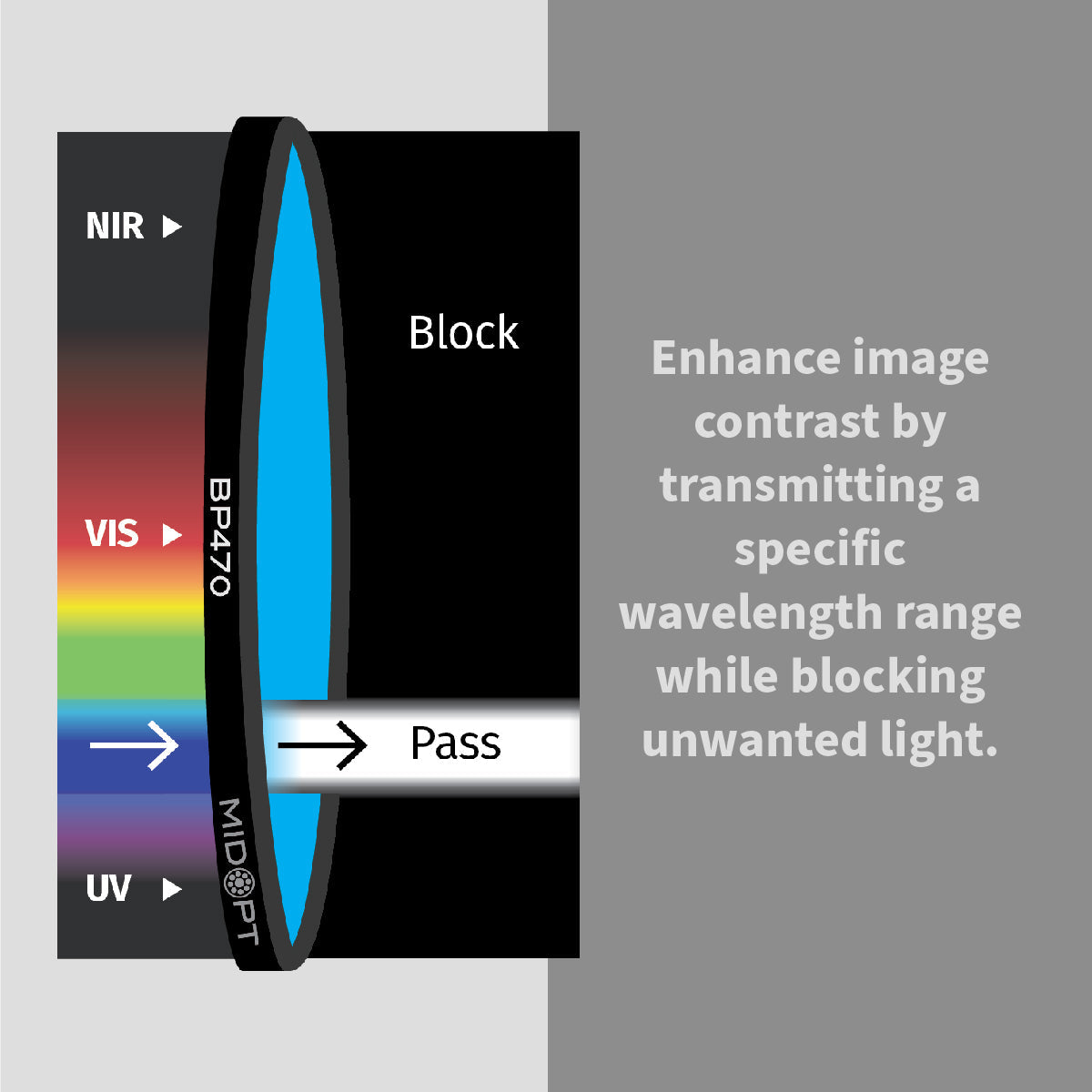
Infrared imaging refers to capturing light that is reflected or transmitted in the NIR (near-infrared) or SWIR (short-wave infrared) spectrum. These wavelengths behave similarly to visible light, meaning they require illumination from an external source.
Infrared Ranges Used in Machine Vision
- NIR: ~700-1000nm
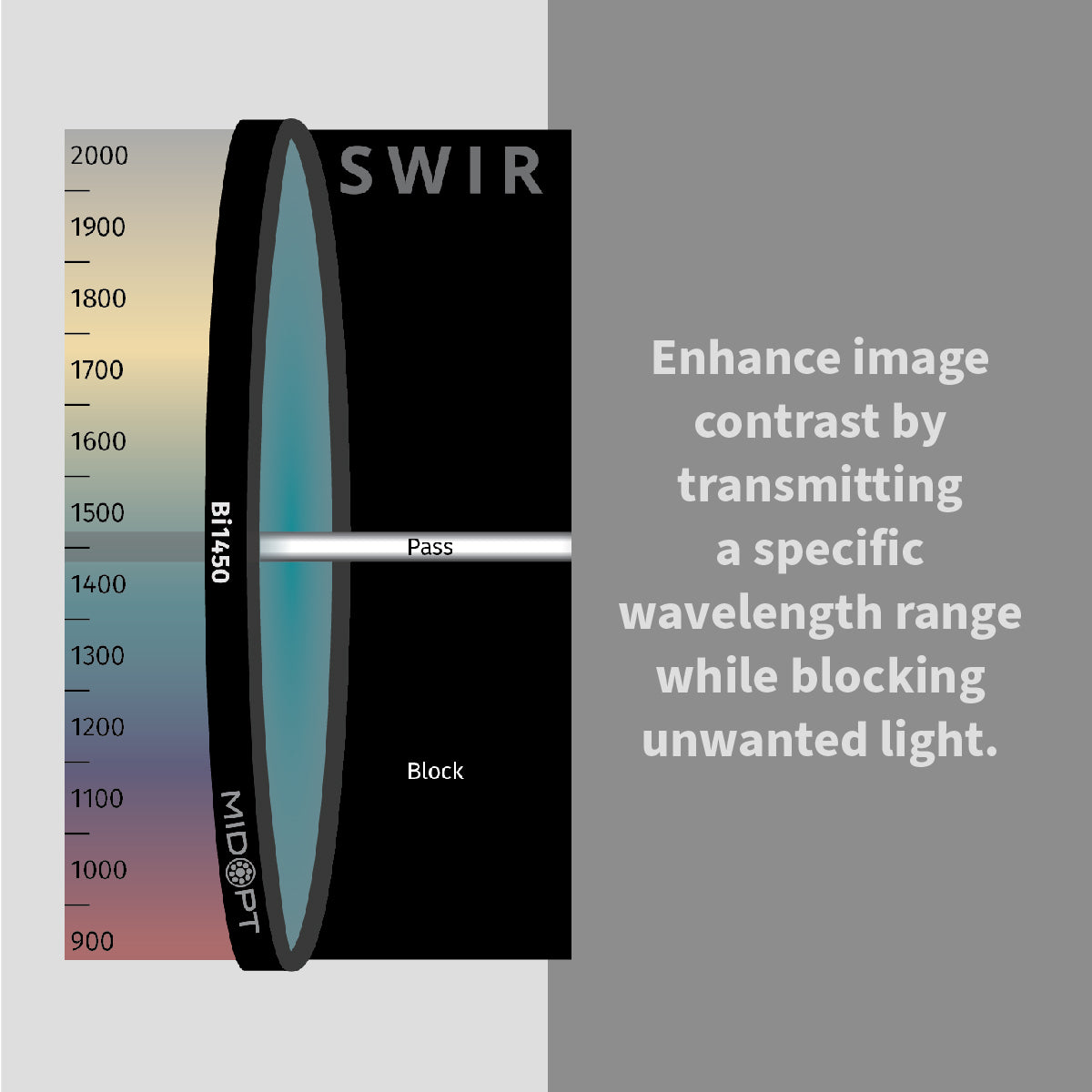
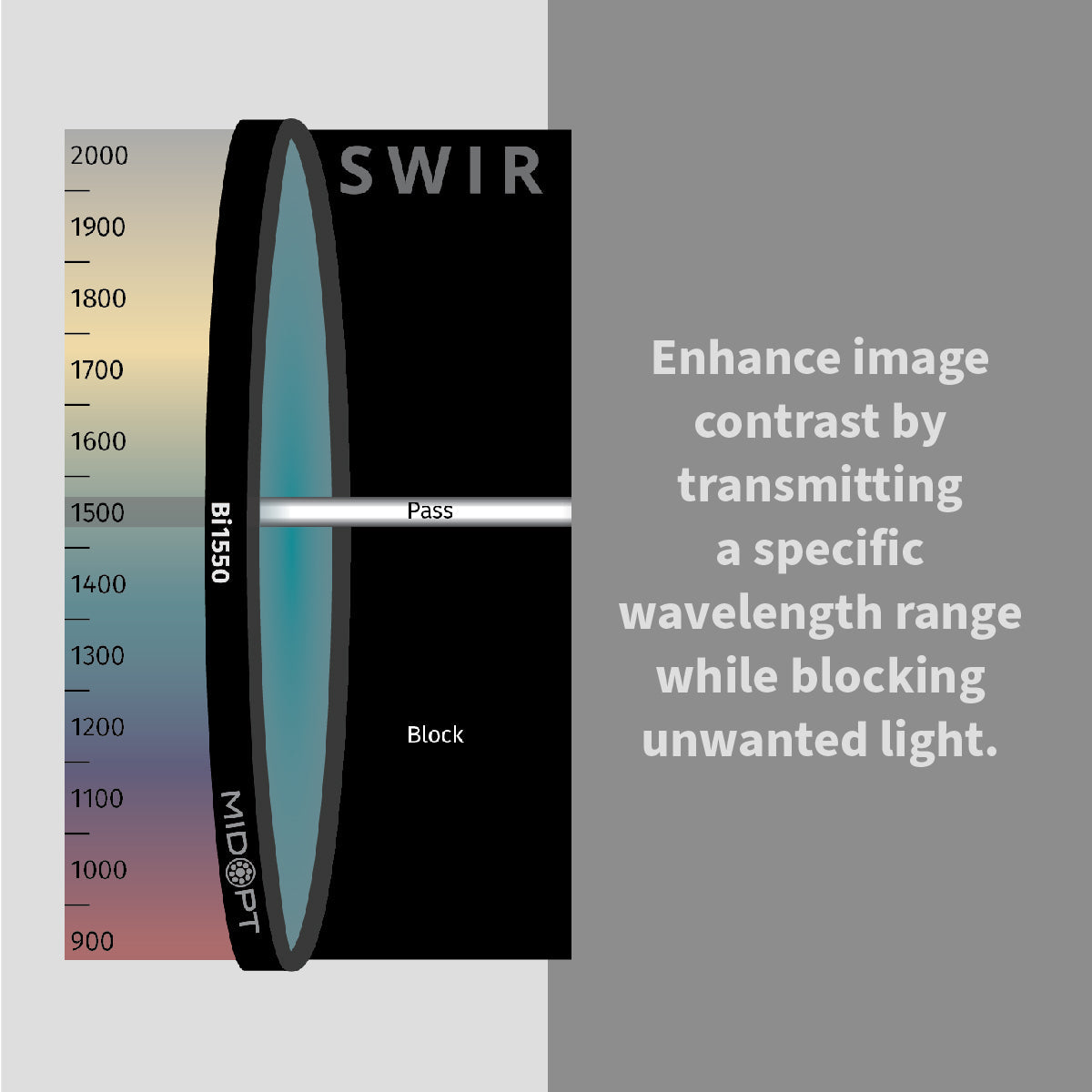
- SWIR: ~1000-2500nm
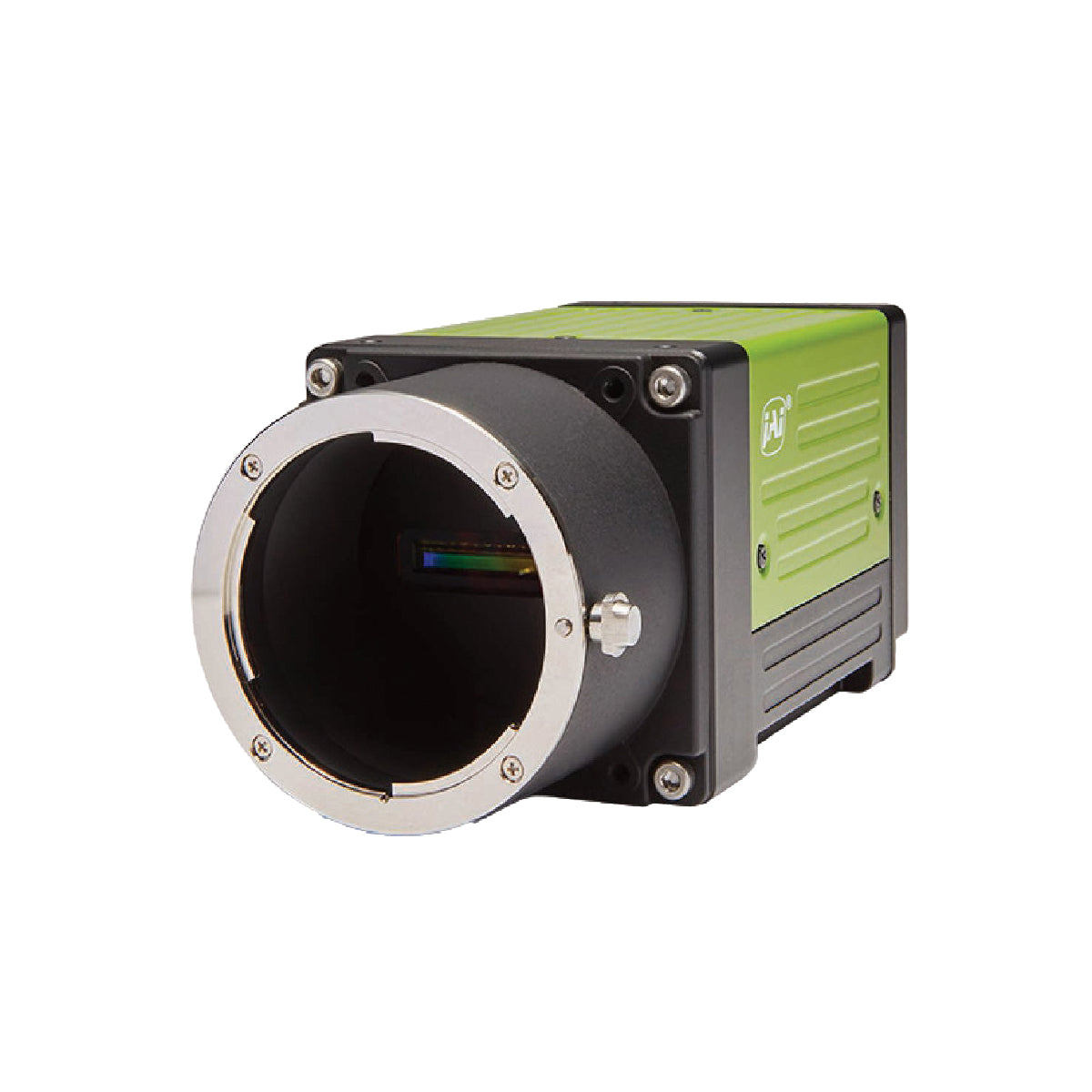
Cameras designed for these wavelengths detect how materials reflect or absorb IR light, making hidden features visible.
What Infrared Imaging Detects
- Subsurface details (beneath inks, plastics, coatings)
- Moisture variations
- Material differences (metals, plastics, textiles, organics)
- Contaminants or defects not visible in RGB
- Water content or bruising in produce
- Features obscured by printed labels or coatings
Key Benefits
- Works with external illumination for high-speed inspection
- Reveals chemical and structural differences
- Ideal for imaging through filters, plastic films, or inks
- Captures crisp, high-contrast images
Typical Use Cases
- Electronics inspection (bond wires, PCB layers, fill levels)
- Food sorting (bruises, ripeness, water content)
- Pharmaceutical inspection (seal integrity, blister packs)
- Packaging (reading codes through shrink-wrap or print)
- Material sorting and recycling
Thermal Imaging: What It Is and How It Works
Thermal imaging detects heat emitted by objects rather than reflected light. Every object above absolute zero emits thermal radiation, and thermal cameras capture this emission to generate temperature maps.
Thermal Imaging Wavelengths
- LWIR (Long-Wave Infrared): ~8-14μm
- MWIR (Mid-Wave Infrared): ~3-5μm
Unlike infrared imaging, thermal imaging does not require illumination – it senses naturally emitted heat.
What Thermal Imaging Detects
- Temperature differences (even fractions of a degree)
- Hot spots or heat leaks
- Friction, overheating, or electrical issues
- Thermal patterns from mechanical wear
- Human body heat or presence
Key Benefits
- Works in total darkness
- Excellent for predictive maintenance
- Ideal for monitoring active heat sources
- Provides temperature measurements directly
Typical Use Cases
- Electrical inspections (overloaded circuits, hot fuses)
- Predictive maintenance (bearings, motors, pumps)
- Building inspection (insulation, leaks, HVAC issues)
- Fire safety and monitoring
- Security and surveillance
- Process control where temperature is critical
Infrared vs Thermal Imaging: Key Differences at a Glance
| Feature | Infrared Imaging (NIR/SWIR) | Thermal Imaging (MWIR/LWIR) |
|---|---|---|
| Wavelength Range | 0.7-2.5µm | 3-14µm |
| Requires Illumination? | Yes | No |
| Detects | Reflected IR light | Emitted heat |
| Reveals | Material and structural differences | Temperature variations |
| Resolution | High | Lower than visible/NIR cameras |
| Best For | Inspection & identification | Temperature-based diagnostics |
| Common Uses | Food sorting, packaging, electronics | Maintenance, leak detection, safety |
When to Use Infrared Imaging
Choose infrared imaging when your goals include:
- Detecting defects beneath surfaces
- Seeing through inks, coatings, or films
- Sorting materials by chemical composition
- Enhancing contrast for machine inspection
- Imaging high-speed production with controlled lighting
Example: Identifying bruises on fruit that are invisible to the eye but show strongly in NIR.
When to Use Thermal Imaging
Choose thermal imaging when your application relies on temperature rather than reflected light.
- Electrical hot-spot detection
- Monitoring machinery for wear
- Checking filling processes that use heat
- Detecting human presence
- Finding leaks in buildings or pipes
Example: Locating overheating components in an electrical panel.
Can Infrared and Thermal Imaging Work Together?
Yes. Some systems use both technologies to provide complementary data.
For example:
- SWIR + Thermal for early fire detection
- NIR + Thermal for industrial process control
- Visible + NIR + Thermal for advanced robotics and inspection
Using both expands the range of detectable defects and conditions.
Understanding infrared vs thermal imaging is critical when designing a machine vision solution. While infrared imaging excels at revealing structural and material differences using reflected light, thermal imaging is unmatched for detecting heat signatures and temperature anomalies. The right choice depends entirely on what you need to “see.”